Hydration bag
Hydration bag
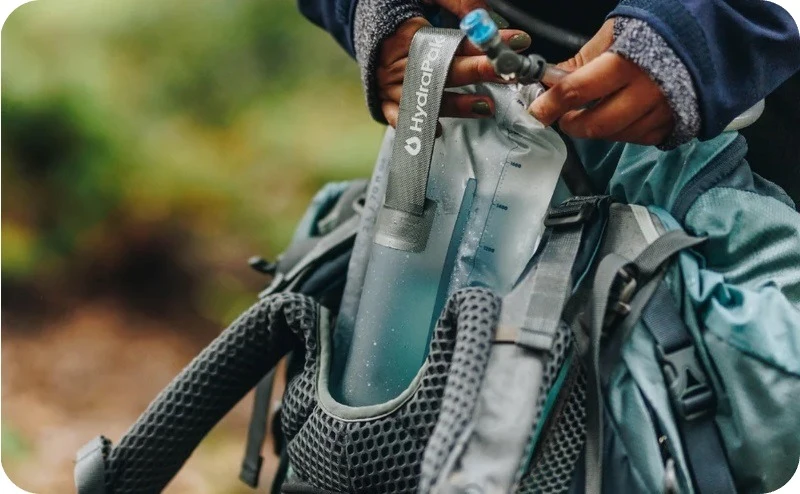
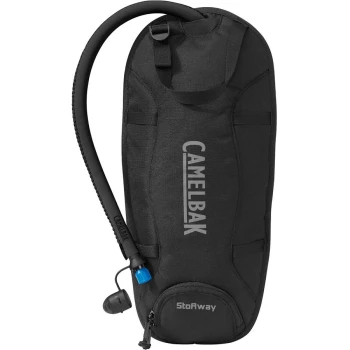
A hydration bladder (also known as a reservoir) is a flexible, reusable container designed to store liquids—typically water. It is primarily carried inside a specially designed backpack, allowing athletes to drink while on the move, conveniently and hands-free.
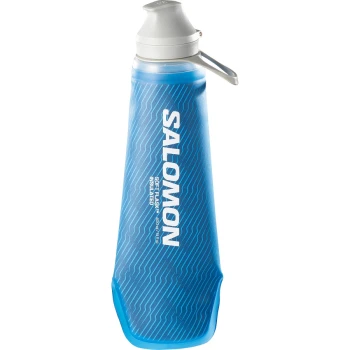
A hydration flask (or "soft flask") is a flexible, collapsible water bottle designed primarily for endurance athletes, such as trail runners, marathoners, or cyclists.
These are widely used in outdoor and endurance sports, including mountain biking (MTB), hiking, backpacking, and trail running. Their major advantage over traditional water bottles is that they facilitate continuous, safe hydration, as athletes do not need to stop moving or let go of their handlebars or trekking poles to take a drink.
To choose the right hydration bladder (or water reservoir) for your outdoor activities, consider these key factors: capacity, compatibility with your backpack, the type of closure, and the material.
1. Capacity (Water Volume)
Select the size based on the duration of your outings and the availability of water sources:
Hydration Bladder:
• 1 to 1.5 liters: Ideal for short runs (road or trail), fast-paced cycling, or hikes lasting less than two hours. Adds minimal weight.
• 2 liters: The most versatile and balanced option. Perfect for most day hikes, moderate trekking, and long cycling rides.
• 3 liters or more: Designed for long-distance hikes, multi-day expeditions, or desert environments where you may go many hours without the chance to refill your water.
Soft Flask:
• 250 ml or less: Ideal for short runs (under 1 hour), quick training sessions, or for carrying diluted energy gels.
• 500 ml (Most common): This is the standard size for most hydration vests. It offers the perfect balance between weight and capacity for runs lasting 1 to 3 hours between aid stations.
• 600 ml – 750 ml: Designed for very hot environments, long self-supported routes, or runners with high fluid intake. Note: Ensure they fit into the pockets of your vest.
2. Closure and Filling Mechanism
The opening system determines how easy it is to refill and clean:
Hydration Bladder
• Screw-cap closure: Features a rigid, circular opening. It is highly leak-proof, but the thickness of the cap can make it more difficult to insert into a fully packed backpack.
• Slide-top closure: The top folds over and is sealed with a sliding clip. This leaves the bladder completely open, making it much easier to clean, dry, and add ice cubes.
Soft Flask
• Wide mouth: Makes rapid refilling at aid stations much easier and allows for the addition of ice or isotonic powders without spilling.
• Narrow mouth: These are lighter, but they are more difficult to clean and refill when you are in a rush.
3. Tube Connection and Valve
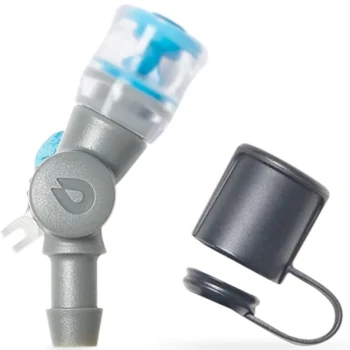
• Quick-connect system: Allows you to detach the tube from the bladder with the press of a button. This is highly recommended, as it lets you remove the bladder for refilling without having to unthread the entire tube from the backpack’s shoulder straps.
• Bite valve: Look for high-flow silicone valves that open only when bitten. Some advanced models feature a twist-lock system on the cap, ensuring that not a single drop of water escapes when you carry them in a backpack or suitcase.
Hydration bladders and soft flasks at Tècnic Esports
In our store, you will find a selection of hydration bladders. Choosing a hydration bladder or a soft flask is an excellent decision if you participate in outdoor sports—such as cycling, trail running, hiking, or trekking—and are looking for convenience, performance, and self-sufficiency.
Want to see them in person? Visit us at Tècnic Esports, Encamp — expert advice on skiing, mountaineering, and climbing.