


Telescopic poles
Telescopic poles
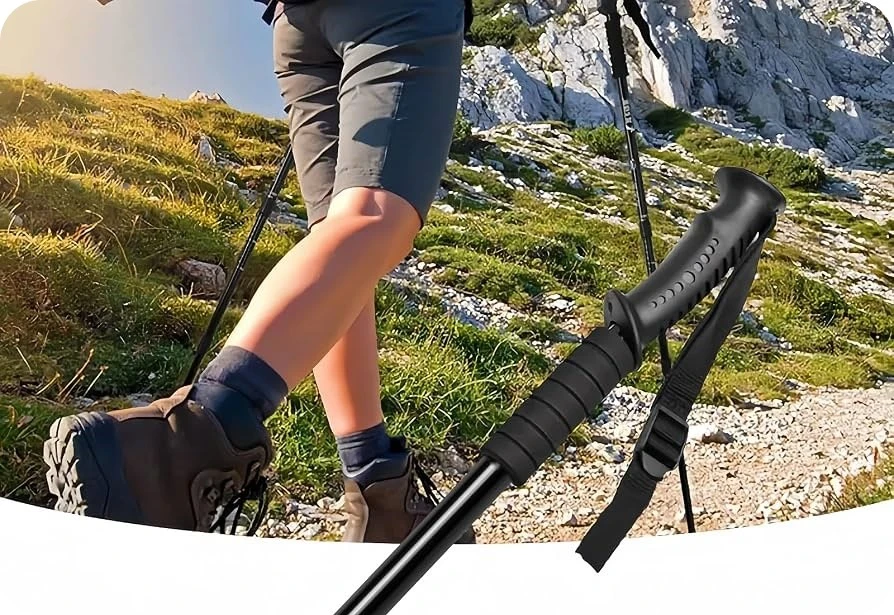
A telescopic mountain or trail pole is a piece of sports equipment designed to provide stability and traction, while reducing impact on the joints for hikers, mountaineers, and trail runners during outdoor activities. Its defining feature is a set of adjustable sections that either slide into one another or fold together using a tension-cable (probe-style) system. This retractable design allows the poles to be collapsed down to a minimal size, making them easy to carry—either attached to the outside of a backpack or stowed inside—when not in use.
When choosing the ideal telescopic mountain poles, you should consider several key factors: the locking system, the material, the type of grip, and the number of sections. The perfect pole for you will depend on the type of terrain you traverse and whether you prioritize low weight or high durability.
1. The adjustment system (locking mechanism) and number of sections
This is the mechanism used to adjust the height and secure the sections in place.
• Clip or lever lock (Speed Lock): This is the most highly recommended option. It is very easy to use—even while wearing gloves—and you can tell at a glance whether it is properly secured. It is also the most reliable and durable type.
• Tension-cable (or "probe-style") locking system: This mechanism is most commonly found on foldable trail-running poles, as it is exceptionally fast to deploy and very lightweight.
Telescopic poles are typically divided into sections that collapse into one another.
• 3-section: This is the standard for mountain use. It offers the best balance between strength, adjustability range, and a compact size for carrying on a backpack.
• 2-section: These are more rigid and stable (having fewer joints), but they do not collapse down very small. They are primarily used for ski touring or snowshoeing.
2. Shaft material
This determines the weight, price, and how the pole responds to impacts.
• Aluminum (typically 7075 aluminum): This is the strongest and most durable option. If subjected to a hard impact, it will bend rather than snap, which allows you to still make it back home. It is slightly heavier but more affordable. Ideal for technical terrain, scree slopes, and demanding treks.
• Carbon fiber: This material is ultralight and excellent at absorbing vibrations. The downside is that it is more expensive and fragile when it comes to lateral impacts; under high pressure or a sharp blow against a rock, it may snap instead of bending. Ideal for trail running or light hiking.
3. Components of a Trekking Pole
To fulfill its ergonomic and technical purpose, a pole consists of the following parts:
• Grip: Designed for holding the pole. The best materials are EVA foam (which absorbs sweat and provides a non-slip surface) or cork (a natural, durable material). Long grips allow you to adjust your hand position on the fly when navigating steep slopes.
• Wrist strap: An adjustable strap that connects your wrist to the grip. It helps distribute the load and ensures you don’t lose the pole if you fall.
• Baskets: Plastic discs attached near the tip. Small, "summer" baskets prevent the pole from getting wedged between rocks, while larger baskets keep it from sinking into snow or mud.
• Tip: Usually made of carbide or tungsten to ensure maximum traction and durability on hard ground or bare rock.
Telescopic poles at Tècnic Esports
In our store, you will find a selection of telescopic poles. Choosing telescopic trekking poles is essential, as they directly influence your performance, safety, and joint health by reducing impact on your knees and back during outdoor activities; they also improve balance and allow you to adjust the pole length in real time based on the slope of the terrain.
Want to see them in person? Visit us at Tècnic Esports, Encamp — expert advice on skiing, mountaineering, and climbing.


